
Solscan: The Solana Explorer I Actually Use (and Why it Matters)
Whoa! Okay, start right here—Solscan is one of those tools that quietly becomes indispensable. Really? Yes. It’s fast. Clean. And it gives you a window into Solana that feels like a dashboard for blockchains, not some clunky database. My first impression was « nice UI, » but then I dug in and noticed how deep the data goes, and how quickly it surfaces the stuff you actually care about.
At a glance, Solscan shows transactions, blocks, token transfers, program logs, and NFT mint events. Short answer: if you want to know what happened, and why, Solscan usually tells you. Hmm… something felt off about other explorers—latency, limited program insight—but with Solscan those frictions are lower. Initially I thought it was just pretty visuals, but then I realized the tooling under the hood is robust. Actually, wait—let me rephrase that: Solscan pairs polish with practical features you use daily.
Here’s what bugs me about explorers in general: many present raw data without context. They dump logs and expect you to be a protocol archaeologist. Solscan tries to interpret and layer meaning on top, while still giving you the raw receipts if you need them. I’m biased, but for most devs and power users the UX difference is huge. The thing is—data matters more than looks, though actually the looks push you into the data faster.
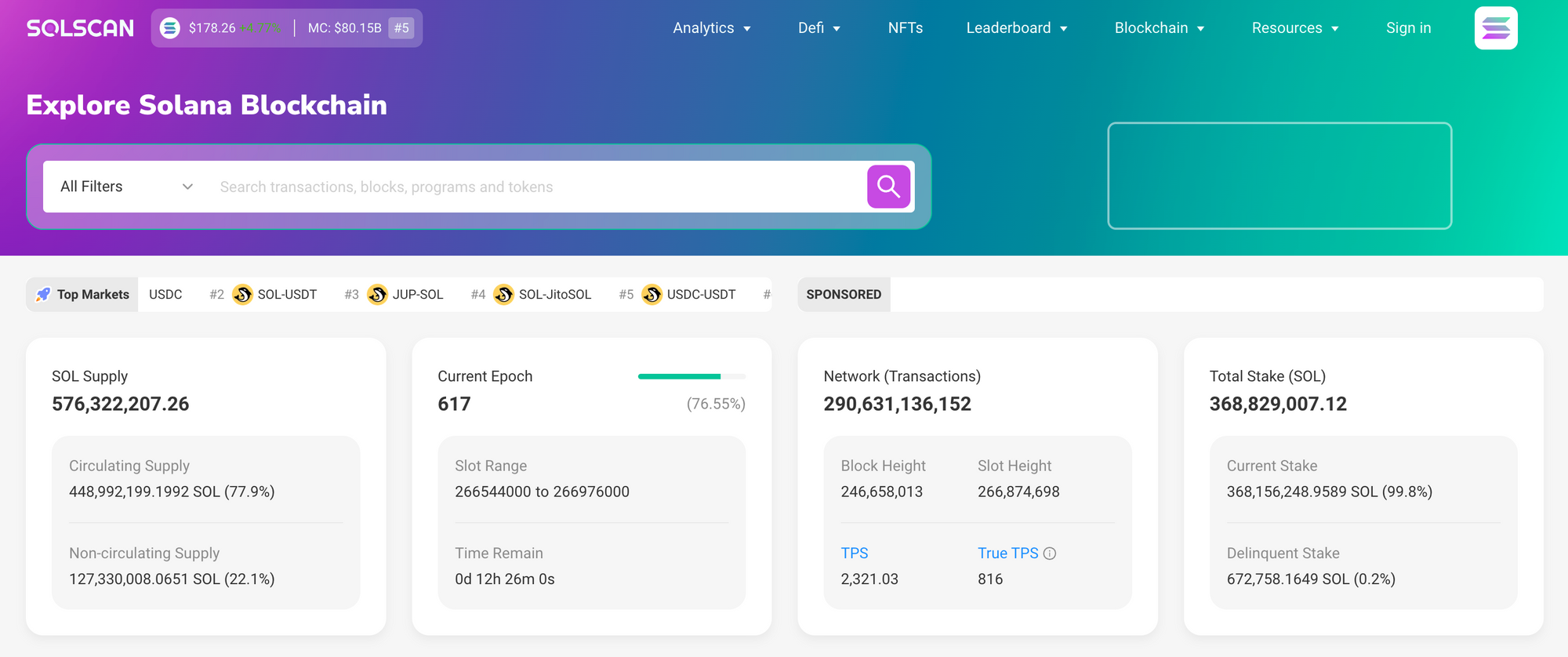
How I use Solscan in real workflows
Okay, so check this out—when I’m troubleshooting a failed transaction I paste the sig into Solscan and get instant context: which instruction failed, which program threw the error, and often the exact log line that points to the bug. For token research I use the token page to track holders and transfers. For NFTs I inspect mint history and metadata fetches to confirm provenance. And for audits or due diligence, seeing program interactions and account balances over time is invaluable.
For newcomers: start with a signature or wallet address. Use the « Transactions » tab to trace time-ordered activity. Try the « Programs » view for on-chain programs. If you want the official access point, use this: https://sites.google.com/cryptowalletextensionus.com/solscan-explorer-official-site/ —that’s where I go first. It keeps you pointed to the supported entry.
On one hand, Solscan isn’t the only explorer out there. On the other hand, it often surfaces the useful stuff faster than competitors. Seriously? Yes. My instinct said Solscan was a front-end layer, but after comparing logs I saw it reconciles and surfaces decoded instruction data more cleanly than many peers. That matters when you’re triaging issues under time pressure.
Some practical tips:
- Search by transaction signature to get full instruction traces and logs.
- Use the token page to identify top holders and transfer history—great for spotting token dumps or airdrop patterns.
- Check program logs when a CPI chain goes sideways; they often show the failing instruction and gas/compute usage.
- Look at account state snapshots to confirm on-chain metadata (useful for NFT provenance).
There are limits though. Solana itself moves fast. Sometimes explorers lag during congestion windows, and not every interaction is perfectly decoded—especially custom program data. Also, developers who rely on private RPC endpoints might see some differences vs. public data. So think of Solscan as your window, not the single source of truth. Oh, and by the way… sometimes the UI shows cached stats that update a beat later. It’s minor, but it’s there.
Deeper concerns and a few caveats
Initially I worried about privacy—block explorers are, after all, transparent by design. On-chain transparency means anyone can follow transfers. If you’re trying to analyze behavior, Solscan makes that easier; if you want privacy, well, Solana isn’t the place. On the technical side, if you’re debugging complex cross-program invocations you’ll still want local instrumentation and logs from your program during testing. Solscan complements, it doesn’t replace, proper dev tooling.
Another note: Be wary of third-party links disguised as official resources. Always confirm addresses and signatures before trusting a UI prompt. I’m not being alarmist—just practical. In the US dev scene we talk about « do your own research » a lot, and that applies here too. Somethin’ to keep in mind when jumping from a Twitter link to a contract explorer page…
FAQ
Q: Is Solscan safe to use?
A: Yes—it’s a read-only explorer. You aren’t connecting your wallet to view chain data. That said, always avoid signing transactions from links you don’t trust. Use the explorer for inspection and cross-reference with other tools when in doubt.
Q: Can Solscan decode custom program instructions?
A: It can for many standard programs and popular libraries, but custom or private instruction layouts might not be decoded perfectly. For that, you’ll need local decoding tools or source-level info.
Q: How up-to-date is Solscan?
A: Generally near real-time, but during network spikes there can be small delays. If exact timing matters, compare multiple explorers or an RPC node you control.
